Whatsapp:+86 17852301313 Email:tinghe.lv@yimaotomg999.com


How to Fix Clogged Drip Emitters (and Stop Them Coming Back)

You walk out to the garden and half your tomatoes are wilting. The soil is bone dry. But the drip system ran this morning. You check the emitters and yep — half of them aren’t dripping.
Clogged emitters are the most common drip irrigation failure I see. They’re also the most frustrating, because the whole point of drip is set-it-and-forget-it. When a line plugs up, you don’t notice until plants are stressed.
Here is how to fix a clogged emitter — and more importantly, how to stop it from happening again.
How to tell if an emitter is clogged
This sounds obvious, but I have seen people chase the wrong problem. Before you start pulling things apart, check:
- No water at all from the emitter. Most common. Could be a full clog or a kinked line.
- Dripping slower than normal. A 1 GPH emitter that is putting out a thin trickle every few seconds is partially blocked.
- Water spraying or misting. Pressure buildup behind a partial clog can shoot water out instead of dripping.
- Wet spot or puddle at the emitter. The emitter body might be cracked or the barb might have pulled loose from the tubing.
If you have multiple emitters on the same lateral line and only some are slow, it is almost certainly a clog — not a pressure or supply problem.
What is actually inside that emitter
Drip emitters are surprisingly precise. Inside a typical 1 GPH or 2 GPH emitter, water spirals through a labyrinth channel about the width of a hair, dropping pressure from your supply line (25-30 PSI after the regulator) down to zero at the outlet. It does not take much to block that channel.
The stuff I have pulled out of clogged emitters over the years:
- Mineral scale. Calcium and magnesium carbonates from hard water. Looks like white grit or chalk. Common if you are on well water.
- Algae and biofilm. Slimy green or brown gunk. Thrives in warm water sitting in black poly tubing under the sun. Once it starts, it spreads fast.
- Sediment. Sand, silt, tiny bits of rust from old galvanized pipes. A 120-mesh filter (125 micron) catches most of this, but finer stuff still gets through.
- Root intrusion. Less common but nasty. Fine roots can grow into emitters searching for water. I have mostly seen this with subsurface drip and in raised beds where roots grow dense.
- Insects and debris. Ants, earwigs, and dirt sometimes crawl into open emitter outlets between seasons.
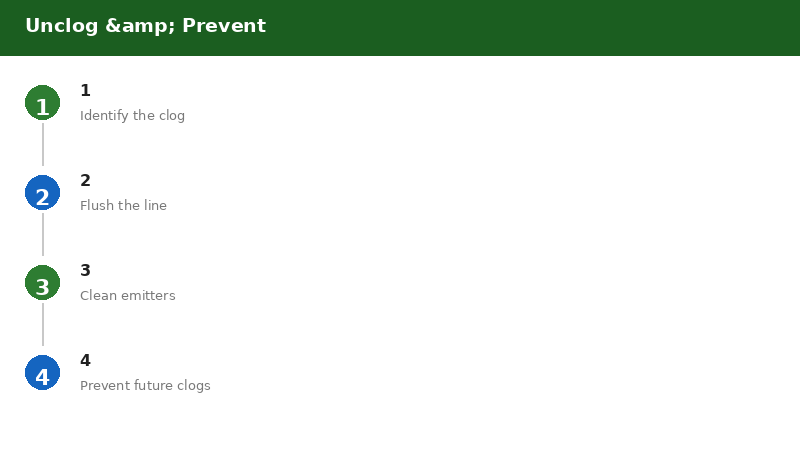
Step by step: fix the clog
1. Flush the lateral line first
Do not just clean one emitter and call it done. Whatever clogged that emitter is probably sitting in the line too. Open the end cap or flush valve at the end of the lateral and let water run for 30-60 seconds. You will see cloudy water at first — that is the sediment flushing out.
If the flush water is full of algae slime, you have a bigger problem. Skip to the prevention section below.
2. Remove the emitter
Most emitters barb into 1/2″ poly tubing. You can usually pull them out by hand. If they are stuck, wiggle side to side. Avoid using pliers unless you are okay with replacing the emitter — the plastic barbs crush easily.
For inline emitters (the kind built into the tubing every 12 or 18 inches), you cannot remove them. You have to clean or replace that section of tubing.
3. Clean or replace
Soak in white vinegar. Mineral clogs dissolve in acid. Drop the emitter in a cup of white vinegar for 2-4 hours. Rinse with water afterward. This works maybe 60% of the time for scale clogs.
Use a fine needle or wire. Some people poke a needle into the outlet hole. I do not recommend this unless you are careful — it is easy to enlarge the orifice and ruin the emitter’s flow rate. If you do it, use something smaller than the hole and just dislodge the debris, do not ream it out.
Replace it. Emitters cost about $0.25-$0.50 each for basic button drippers. If vinegar does not clear it, replacement is faster and more reliable than fighting with it. Keep a bag of spares.
4. Reinstall and test
Push the emitter back into the hole in the tubing. It should seat firmly. Run the system and watch for a few minutes to confirm the emitter is dripping at its rated flow.
After everything is running, flag the plants that showed stress. They will bounce back, but give them a deep hand-watering once if they looked bad. The drip system will catch up, but plants in July heat do not have days to wait.
Prevention: stop clogs before they start
Get a real filter
The single best thing you can do. A Y-filter or T-filter with a 120-mesh (125 micron) screen installed after your backflow preventer and before your pressure regulator catches almost everything. Clean it once a month during the growing season — just unscrew the cap, pull the screen, rinse it under a hose.
If your water is consistently dirty or you are on a pond or canal source, step up to a 155-mesh (100 micron) disc filter. They cost more but trap finer particles.
Use a pressure regulator
Drip systems want 25-30 PSI. Without a regulator, household pressure (50-70 PSI) can blow emitters off the tubing, crack fittings, and force debris deeper into the emitter channels. A preset 25 PSI regulator costs about $12 and threads onto your hose bib or valve. Install it.
Flush your lines regularly
Open the end caps on your lateral lines and flush for 30 seconds once a month. This clears sediment before it builds up. If you have a lot of lines, do a few each weekend. It takes five minutes.
Flush with chlorine if you have algae
If you opened a line and found green slime, you need to shock the system. Inject household bleach (unscented, 5.25% sodium hypochlorite) at 1-2 ppm into the water for 30-60 minutes, then flush thoroughly with clean water. Do this at the start of the season or after noticing biofilm. Do not run chlorine through plants — flush first, then resume normal watering.
Injection requires a fertilizer injector or venturi, or you can batch-treat by filling a bucket with diluted bleach and running the system from it. One cup of bleach per 5 gallons of water is roughly a 1% solution. Dilute further and run briefly, then flush.
Keep emitters off the ground
Emitters sitting in wet soil or mulch pick up dirt, bugs, and roots. Stake them up an inch or two above the soil surface. The little plastic stakes cost pennies and make a real difference.
What to buy
Here is the gear I actually keep on hand for emitter maintenance:
- Pressure regulator: 25 PSI preset, 3/4″ FHT x MHT thread. Senninger or Rain Bird. ~$12.
- Y-filter: 120 mesh, 3/4″. Netafim or Amiad. ~$20.
- Emitters: 1 GPH pressure-compensating button drippers. Netafim PCJ or equivalent. ~$0.30 each in bags of 50.
- Goof plugs: For plugging old emitter holes. ~$0.10 each.
- End caps / flush valves: Figure-8 hose end or a manual flush valve for each lateral line. ~$1 each.
- 1/2″ poly tubing punch: A proper punch makes clean holes. Using a nail tears the plastic. ~$8.
When to just replace the whole lateral
If more than half the emitters on a line are clogged, or the tubing itself is full of algae that flushing will not clear, cut your losses. 1/2″ poly tubing is about $0.15 per foot. A 50-foot raised bed lateral costs under $10 to replace. Sometimes that is the right call.
Next Saturday morning, grab a cup of coffee and spend 20 minutes flushing your lines. Your tomatoes will not thank you — but they also will not wilt in August while you are on vacation.